Our Business
At over 80 years old, the Brule River Barn is still an impressive structure. It was built in the 1930s by Finnish craftsmen to house dairy cattle and of course their feed. In a time where modern buildings seem to come and go in a generation, the barn is a testament to a bygone era of hard work and skill built with limited resources and technology.
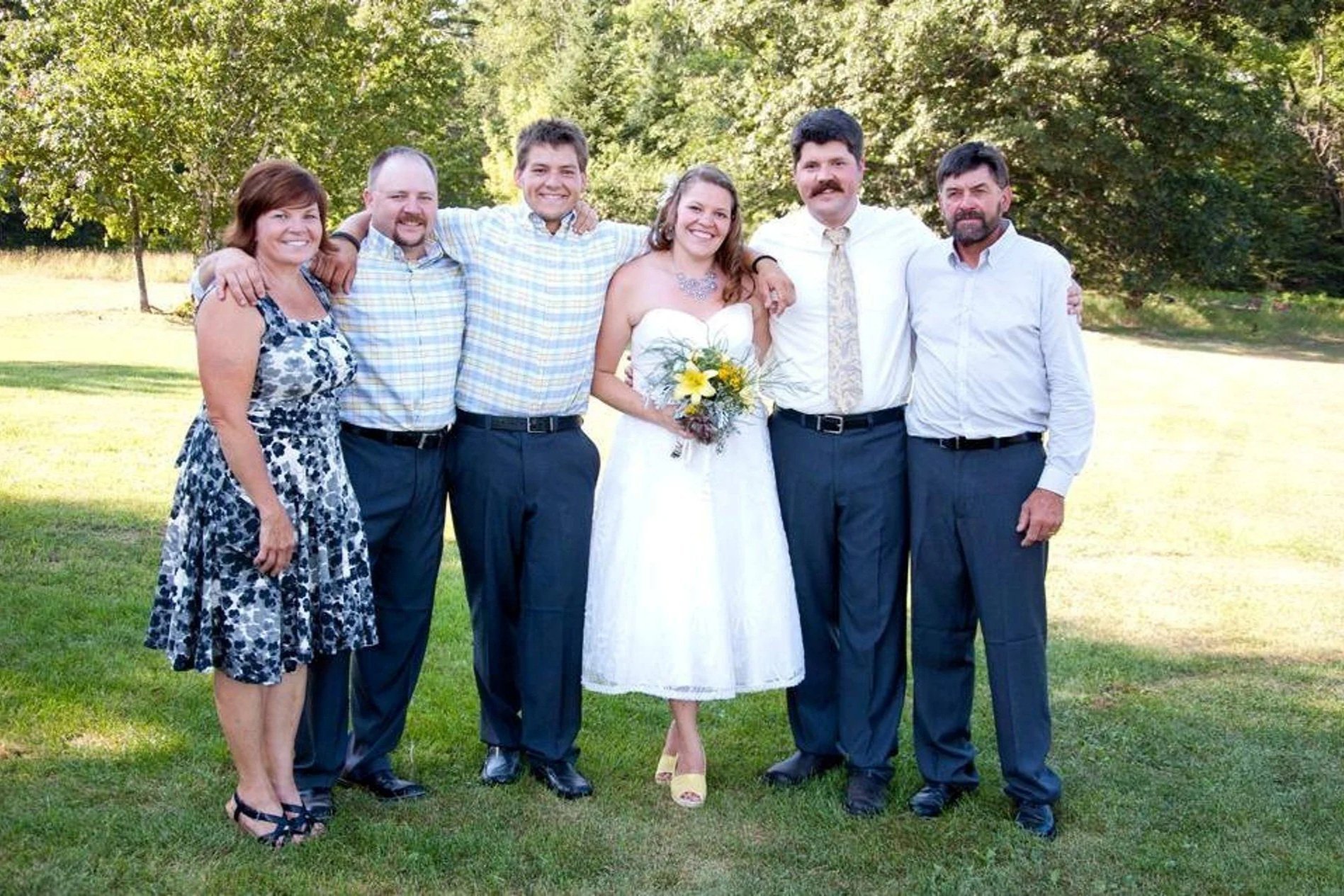
It has been many decades since the barn fulfilled its original purpose, and it fell largely out of use though, not out of mind. The long-ago desire of a little girl to someday have the perfect outdoor wedding and barn dance would go on to forever change the destiny of the old building, from decay and uncertainty to enchanting wedding and event destination. Desire alone, however, cannot transform an aging structure into a beautiful reception hall. Brule River Barn Wedding and Event Center owners Kirk and Jill Clemmer had always known of their daughter’s desire to be wed on their sprawling acres. Knowing this, Jill had, over many years, turned the grounds into a gardening masterpiece, adding and moving countless flower beds, fixtures and ponds.
Once Amanda’s engagement was announced in December 2011, it was Kirk’s turn. As owner of Brule River Builders, he had the skills necessary, but would he have the time? Kirk and Jill were given approximately 7 months to finish the monumental task. Not only was it completed in time, but the event, buildings and grounds were such that astonished guests all but demanded they open the barn and grounds for access to future brides and event planners.
2012
2025
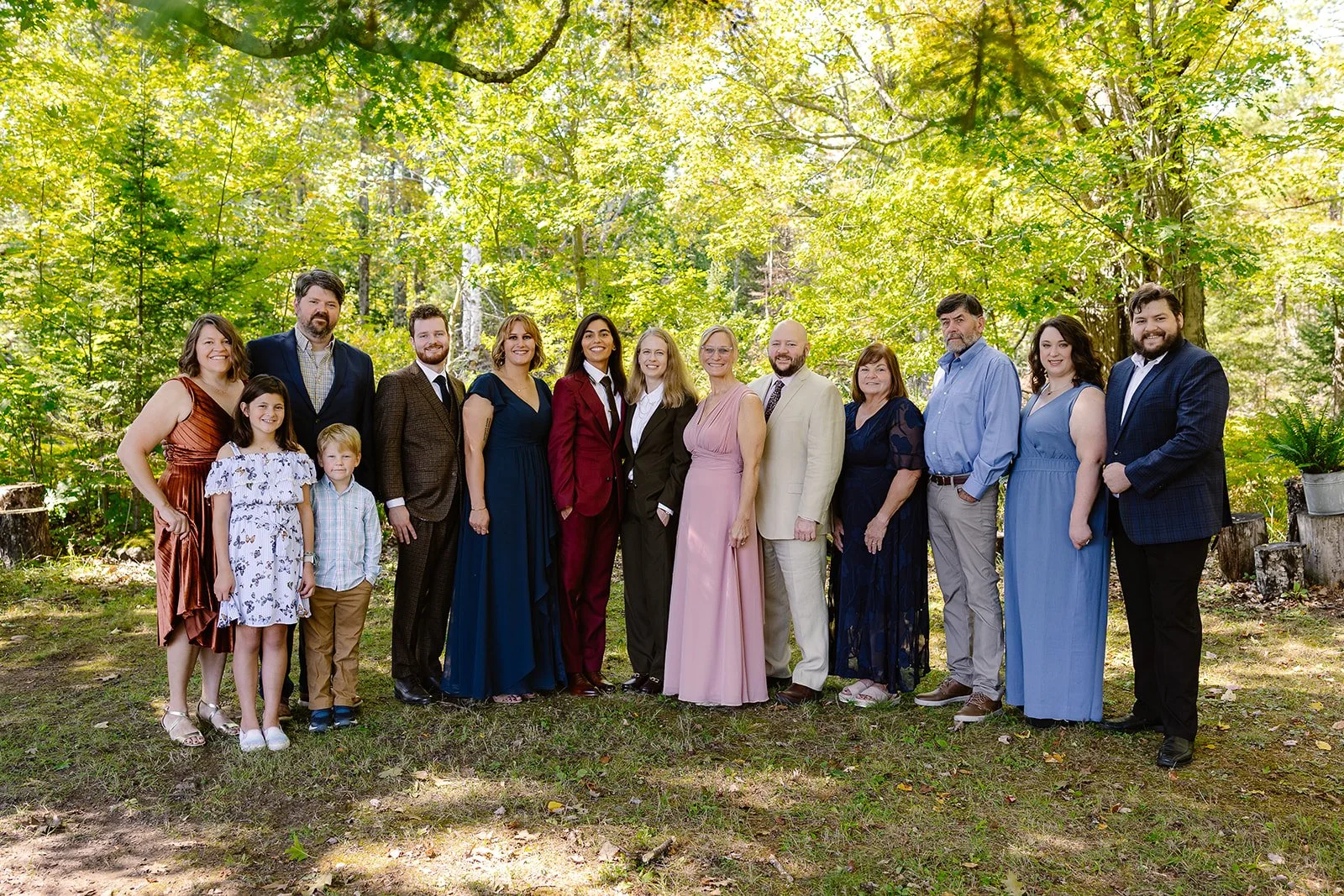
Almost immediately, the Brule River Barn Wedding and Event Center began to attract the attention of engaged couples seeking that perfect and unique wedding experience. Whether you choose to exchange vows at one of the wonderful locations on the grounds; to eat, drink and be merry after holding your ceremony elsewhere; or to simply dance the night away, the Brule River Barn Wedding and Event Center has the ability and desire to make your special day one that everyone will talk about and no one will forget.
For those who have event needs other than tying the knot, consider the Brule River Barn Wedding and Event Center for things such as graduation parties; class and family reunions; company meetings and retreats; or photo opportunities. The owners and staff of Brule River Barn Wedding and Event Center look forward to working with you to make the absolute most of whatever brings you together.
Our History
The Brule River Barn property was among the first settled north of Brule by Europeans. As a third generation Finnish immigrants and the second family to own the property, we’re proud to share our history.
Brule, Wisconsin
An Ojibwe birch bark canoe circa 1910. Click to expand.
Like much of the Great Lakes region, Northwest Wisconsin was sculpted by glaciers in the Ice Age. Humans came to the Brule area twelve thousand years ago as hunter-gatherers that also took advantage of unique native deposits. Later cultures built lightweight birchbark canoes that enabled swift transportation on the waterways of the area.
At first, European colonialists came to the area for its furs, then to investigate the Bois Brule River as a part of the Northwest Passage as the Brule River’s headwaters are very close to the St. Croix, which flows into the Mississippi. The Brule Portage Trail follows the overland route between the two.
This 1688 map by a French cartographer shows the Brule River as R Neouatsicoton (Burntwood River). Click to expand.
Over time, ownership of the land passed from the native peoples to the French, then British, then Americans. American interest in the western Great Lakes region only really grew in the mid-1800s. A survey team to the area in 1848 complained of the difficulty of navigation, emptiness of the land, and bugs. Regardless of the conditions, the possibility of copper and other mineral riches was too great to ignore. After the Soo Locks were built in 1855, Lake Superior’s shores were flooded with mineral and land speculators.
Mining was tried near the mouth of the Brule River, but failed due to the weather and transportation issues. Afterwards, the region turned to logging and used the Brule River as a highway to send wood to Lake Superior.
As Superior and Ashland grew nearby and the Northern Pacific Railroad was built, Brule began growing and people started coming for hunting and fishing. However, the Panic of 1893 collapsed the railroad industry, which stopped the fledgling economic boom in its tracks. Today, Brule remains a hunting and fishing destination, celebrated for its trout and salmon fishing and outdoor recreation.
Source: Wisherd, Nan. Brule River Country. Cable Publishing, 2017.
President Calvin Coolidge fishes at Cedar Island Lodge on the Brule River, which was later dubbed the Summer White House. Click to expand.
The Brule River Barn
1887: Settlement
Brule remained a small town, but it attracted a number of Finnish settlers who formed close-knit communities like Waino and Oulu just north of Brule, and the history of the Brule River Barn is very closely tied to these settlers.
The first settlers to arrive north of Brule were Oscar Ekstrom and Charles Johnson. Oscar Ekstrom was only 14 when he and Charles hiked north of Brule and claimed their land. Using the Homestead Act of 1862, Charles took 120 acres that today is at the intersection of County Highway H & Tuura Rd and Oscar Ekstrom—under the name of his mother, Lizzie (Liisa)—took 160 acres including where the Brule River Barn is now.
The first homesteaders in the Brule River Country were Charles Johnson and 14-year-old Oscar Ekstrom, who was too young to file a claim for himself but filed for his mother, Liisa Ekstrom. Late in 1887, Charles and Oscar arrived by train in Brule and began walking north on a primitive trail east of the Brule River. Three miles north of Brule, Oscar chose a 160-acre parcel of land near the trail. Charles walked a mile-and-a-half farther and chose a 160-acre parcel near the trail and with the western boundary near the river. Each paid $2 when they filed a Declaratory Statement for homesteading in December.
Charles couldn't write or speak English and relied on Oscar as they began working toward finalizing their homesteads. They lived together in a crude shack that first winter and started clearing land and building their homes the following spring.
Source: Wisherd, Nan. Brule River Country. Cable Publishing, 2017.
The land patent granted to the Ekstroms under the Homestead Act. Click to enlarge.
A 1961 recounting of the Ekstrom’s settlement. Click to read.

Lizzie and Gust Luoma (?) in front of their home, which still stands as the Farmhouse at the Brule River Barn. The front door of the Farmhouse is now at the rightmost window on the main floor in this picture. Click to enlarge.
1888 - 1931: Creating a Home
Although the first structure built on the Ekstrom’s 160 acres is now just a foundation, two log homes they built before 1906 are still occupied today. One is the Farmhouse at the Brule River Barn, and the other is located east on Kauppi Rd.
Oscar and his family lived on the eastern half of the original 160 acres, and his mother Lizzie lived on the west half. On July 24, 1891, Lizzie married Gust Luoma, who continued to own the property when Lizzie passed away on November 29, 1916.
The images below show what the property looked like in 1938 (the first aerial image available) and today. The Brule River Barn is highlighted with a red rectangle.
2019
1932-1986: From Ekstrom to Clemmer
Gust Luoma died on September 16, 1932 and the property eventually passed on to Oscar Ekstrom’s eldest son Martin and his wife Lillian.
The property continued to operate as a farm for a time under Martin. The silo was added to the Barn around 1939. Some of Martin’s nieces remember visiting the farm when they were younger, recalling that there wasn’t any indoor plumbing, even in the 1970s!
In 1973, Martin passed away and Lillian continued living there until she was moved to a nursing home where she received care until her death in 1996. The property stayed unoccupied from the time she moved until Kirk and Jill bought it on April 8, 1986.
Lillian Ekstrom. Click to enlarge.